Latest Advances in Breast Cancer Detection Technology in India (2026 Update)
Jun 15, 2026
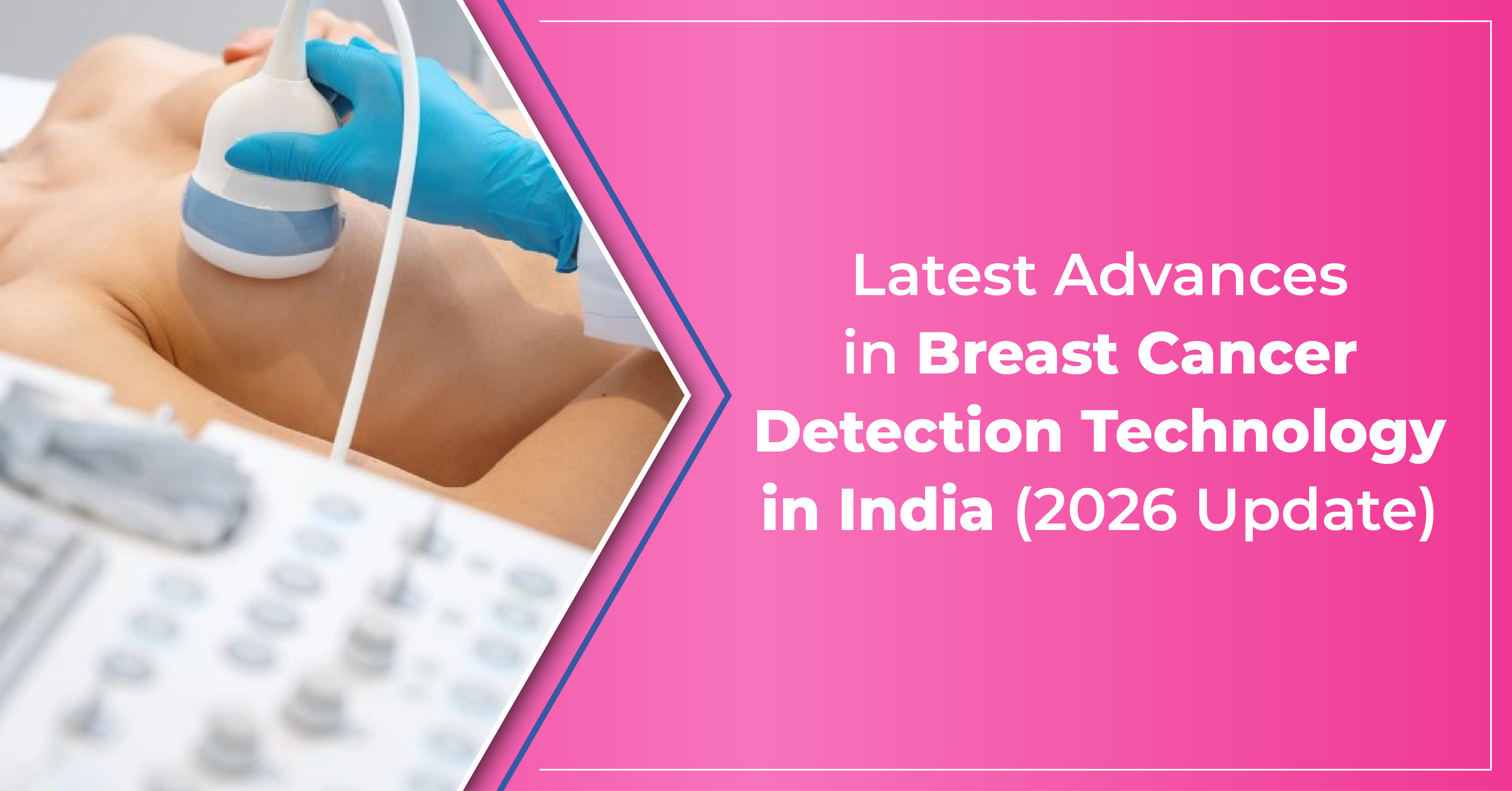
Table of Contents
More from Blog

Jun 15, 2026

Jun 15, 2026

Jun 15, 2026

Jun 15, 2026

Jun 15, 2026
From artificial intelligence (AI)-powered screening tools to radiation-free wearable devices, India is witnessing a significant shift in how breast cancer is detected. These innovations are not just improving accuracy—they are also helping bridge gaps in rural healthcare and reducing diagnostic delays.
Why Early Detection Matters More Than Ever
Early detection is one of the most critical factors in improving survival rates for breast cancer. When diagnosed at an early stage, treatment is more effective, less invasive, and has better outcomes.
However, in India, many cases are still detected at later stages due to lack of awareness, limited access to screening, and infrastructure challenges.
This is where new technologies are making a real difference—by enabling faster, scalable, and more accurate screening across diverse populations.
AI-Powered Mammography: A Game Changer
Artificial intelligence is one of the biggest breakthroughs in breast cancer detection.
AI systems can now analyze mammograms with high precision, identifying even the smallest abnormalities that might be missed by the human eye. Studies show that combining AI with radiologists can improve detection rates significantly—by identifying more cancers at earlier stages.
These systems use deep learning algorithms to scan imaging data and highlight suspicious regions, helping doctors make faster and more accurate decisions.
In India, AI-based platforms like MAMMO-Q are being developed to make screening more consistent and scalable, especially in areas with limited access to specialists.
3D Mammography (Digital Breast Tomosynthesis)
Traditional mammography has evolved into more advanced forms like 3D mammography, also known as digital breast tomosynthesis.
This technology creates a three-dimensional image of the breast, allowing doctors to examine tissue layer by layer. It improves detection accuracy, especially in women with dense breast tissue.
Hospitals in India have already started adopting advanced 3D mammography systems, which offer higher precision and lower radiation exposure compared to older methods.
This makes screening safer and more effective, particularly for routine check-ups.
Thermal Imaging & AI-Based Screening
One of the most exciting developments in India is the use of thermal imaging combined with AI.
Unlike traditional mammography, this method does not use radiation. Instead, it detects heat patterns and blood flow changes in breast tissue—early indicators of abnormal growth.
Technologies like Thermalytix have shown promising results, especially in detecting cancer in women with dense breast tissue.
These systems are particularly useful in low-resource settings because they are:
- Non-invasive
- Portable
- Cost-effective
This makes them ideal for rural screening programs across India.
Wearable and Portable Detection Devices
India is also seeing innovation in wearable and handheld diagnostic tools.
Recent developments include AI-powered, radiation-free wearable devices designed for early breast cancer detection. These devices aim to provide a safer and more accessible alternative to traditional screening methods.
Additionally, handheld tools like iBreastExam are being used for quick, non-invasive screening in community health settings.
These portable technologies are helping bring screening closer to patients, especially in remote areas where access to hospitals is limited.
Multi-Modal AI Systems for Better Accuracy
Another major advancement is the use of multi-modal AI systems, which combine different types of data—such as imaging, clinical history, and tissue characteristics—to improve diagnosis.
These systems analyze multiple inputs simultaneously, increasing accuracy and reducing false positives.
Recent research shows that combining mammography with AI and other imaging techniques can significantly improve detection rates while reducing diagnostic errors.
This approach represents the future of precision diagnostics in India.
Mobile Screening Units & Rural Access
One of the biggest challenges in India is accessibility—and technology is helping solve it.
Mobile screening units equipped with digital mammography and AI tools are now being deployed to reach underserved populations.
Large-scale initiatives, including AI-powered screening programs, are designed to bring early detection services directly to communities, improving coverage and awareness.
These efforts are crucial in reducing late-stage diagnoses and improving survival rates.
Benefits of These New Technologies
The latest advancements are transforming breast cancer detection in multiple ways:
- Earlier detection of small and hidden tumors
- Improved accuracy with AI-assisted analysis
- Reduced radiation exposure with advanced imaging
- Greater accessibility through portable and mobile solutions
- Faster diagnosis, leading to timely treatment
Together, these innovations are making screening more patient-friendly and widely available.
Challenges and Future Outlook
While these technologies are promising, challenges remain.
Cost, infrastructure, and awareness still limit widespread adoption in some regions. Additionally, integrating AI into clinical workflows requires training and regulatory support.
However, the future looks promising. With continued innovation, government support, and public awareness, India is moving toward more inclusive and technology-driven cancer care.
FAQs
What is the latest technology for breast cancer detection in India?
AI-powered mammography, 3D imaging, thermal screening, and wearable diagnostic devices are among the latest technologies.
Is AI better than traditional mammography?
AI enhances traditional methods by improving accuracy and helping detect smaller abnormalities earlier.
Are there radiation-free screening options?
Yes, thermal imaging and some wearable devices offer radiation-free screening alternatives.
How is technology improving rural cancer detection?
Portable devices and mobile screening units are making early detection accessible in remote areas.
Can these technologies replace doctors?
No, they are designed to support doctors, not replace them, improving efficiency and decision-making.
Conclusion
The landscape of breast cancer detection in India is undergoing a powerful transformation. With the integration of AI, advanced imaging, and portable technologies, early detection is becoming more accurate, accessible, and efficient than ever before.
These advancements are not just technological milestones—they represent hope. Hope for earlier diagnosis, better treatment outcomes, and ultimately, more lives saved.
As awareness grows and technology continues to evolve, the future of breast cancer detection in India looks increasingly proactive, inclusive, and patient-centered.
