Breast Screening in India: Which Test Should You Choose and When?
Mar 22, 2026
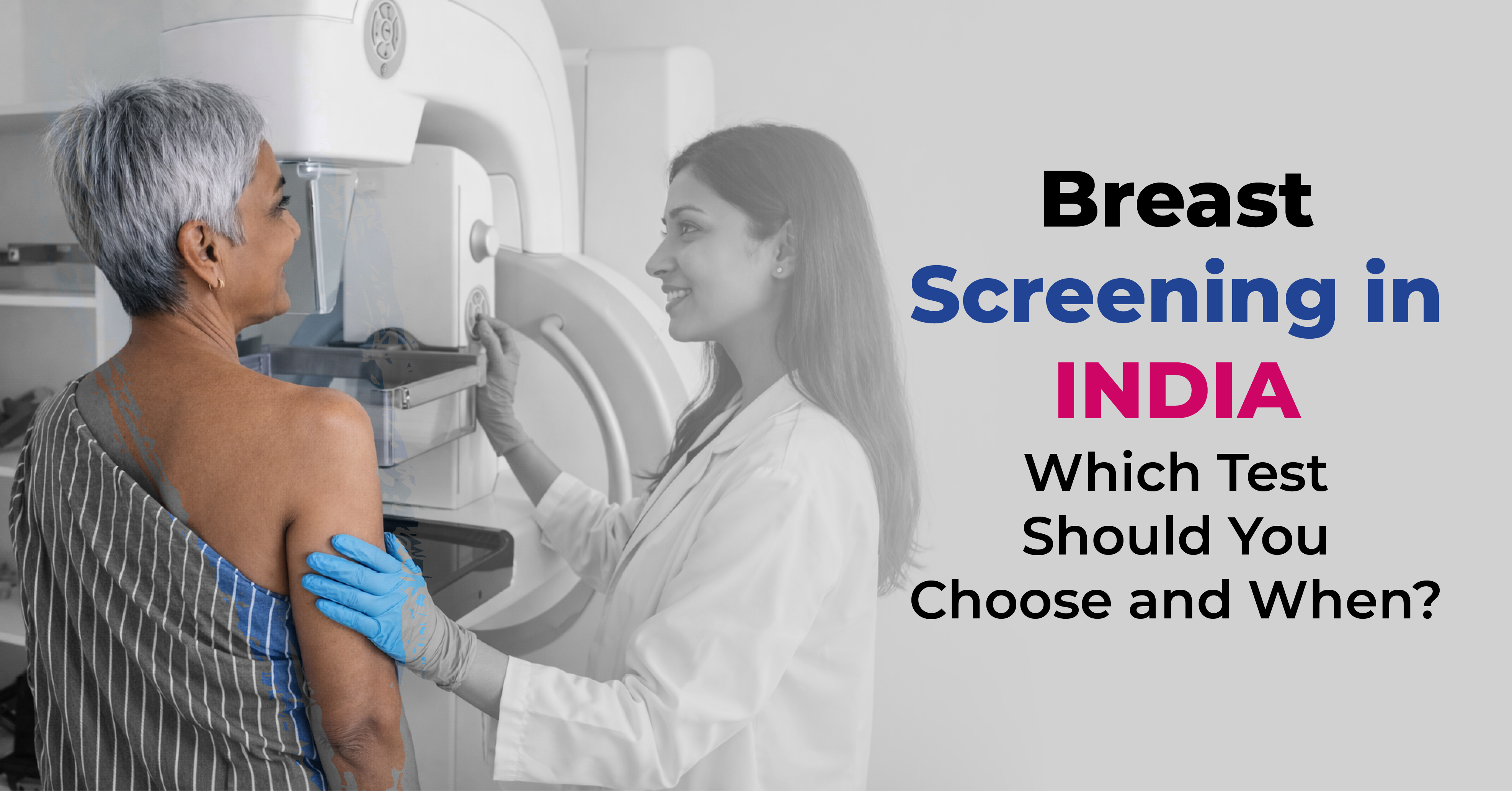
Table of Contents
More from Blog

Mar 22, 2026

Mar 22, 2026

Mar 22, 2026

Mar 22, 2026
Mar 22, 2026
Breast cancer is now one of the most common cancers among women in India. Many women still discover it late — often when treatment becomes more difficult and expensive. The good news? Early detection can save lives.
If you’re wondering which breast screening test is right for you — mammogram, ultrasound, or something else — you’re not alone. Many women feel confused about when to start screening, how often to test, and which method works best.
In simple terms: the right screening test depends on your age, risk level, symptoms, and doctor’s advice.
This guide explains everything about Breast Screening in India — what tests are available, who needs them, when to start, and how to choose wisely.
What Is Breast Screening?
Breast screening means checking your breasts for cancer before you notice any symptoms.
It helps detect cancer at an early stage — sometimes even before a lump can be felt.
Breast screening in India usually includes:
- Breast Self-Examination (BSE)
- Clinical Breast Examination (CBE)
- Mammography
- Breast Ultrasound
- MRI (for high-risk women)
Early detection improves survival rates significantly. According to the World Health Organization (WHO), early-stage breast cancer has a much higher survival rate compared to late-stage detection.
Why Is Breast Screening Important in India?
Breast cancer cases in India are rising every year.
According to WHO and Indian health data:
- Breast cancer is the most common cancer among Indian women.
- Many cases are diagnosed at Stage 3 or 4.
- Early detection can reduce mortality significantly.
Unlike Western countries, India does not yet have a nationwide screening program for all women. That makes awareness even more important.
Regular breast cancer screening in India can:
- Detect cancer early
- Reduce treatment costs
- Increase survival chances
- Provide peace of mind
What Are the Main Types of Breast Screening Tests?
Let's understand each test in simple terms.
1. Breast Self-Examination (BSE)
This is when you check your own breasts at home.
How often?
- Once a month
- Best done a few days after your period
You check for:
- Lumps
- Skin changes
- Nipple discharge
- Swelling
BSE is not a replacement for medical screening, it can help you become more aware of your breast and detect changes early.
2. Clinical Breast Examination (CBE)
This is done by a doctor or nurse.
They examine your breasts and underarms for lumps or abnormalities.
Recommended:
- Every 1–3 years for women aged 20–39
- Every year after 40
3. Mammography (Mammogram)
A mammogram is an X-ray of the breast.
It can detect small tumors before you feel a lump.
Best for:
- Women aged 40 and above
- Women with a family history of breast cancer
It is considered the gold standard for breast cancer screening.
4. Breast Ultrasound
This uses sound waves instead of radiation.
Doctors often recommend ultrasound if:
- You are under 40
- You have dense breast tissue
- A lump needs further evaluation
It is painless and safe.
5. Breast MRI
MRI uses magnetic fields to create detailed images.
Recommended for:
- Women with strong family history
- BRCA gene mutation carriers
- High-risk individuals
MRI is not for routine screening unless advised.
When Should You Start Breast Screening in India?
Here is a simple age-based guide:
Women in Their 20s and 30s
- Monthly self-exam
- Clinical exam every 1–3 years
Women 40 and Above
- Annual mammogram
- Annual clinical exam
- Continue self-exam
High-Risk Women (Any Age)
- Start earlier (sometimes from 30)
- Annual MRI + mammogram
- Consult an oncologist
If your mother, sister, or grandmother had breast cancer, talk to a doctor earlier.
Which Breast Screening Test Should You Choose?
The right test depends on:
- Your age
- Family history
- Symptoms
- Doctor's advice
- Breast density
Simple Rule of Thumb
- Under 40 - Ultrasound first
- 40+ - Mammogram
- High-risk - MRI + Mammogram
Always consult a qualified doctor before deciding.
Breast Screening Test Comparison Table
| Test | Age Group | Purpose | Radiation | Best For |
|---|---|---|---|---|
| Self-Exam | All ages | Early awareness | No | Monthly check |
| Clinical Exam | 20+ | Physical exam | No | Routine check |
| Mammogram | 40+ | Detect early cancer | Yes (low dose) | Standard screening |
| Ultrasound | <40 or dense breasts | Evaluate lumps | No | Young women |
| MRI | High-risk | Detailed imaging | No radiation | Genetic risk |
What If You Notice Symptoms?
Screening is for women without symptoms.
If you notice any of these, see a doctor immediately:
- A new lump in the breast
- Change in breast size
- Nipple discharge (especially bloody)
- Skin dimpling
- Persistent breast pain in one area
Do not wait for your next screening appointment.
How to Prepare for a Mammogram or Ultrasound
Here are simple preparation tips:
Before a Mammogram:
- Avoid deodorant or powder on the test day
- Schedule after your period (breasts are less tender)
- Inform if you are pregnant
Before an Ultrasound:
- No special preparation needed
- The test usually takes 15–30 minutes.
Are Mammograms Safe?
Yes.
Mammograms use low-dose radiation. The benefits of early detection outweigh the small radiation risk.
According to health authorities like the CDC and Mayo Clinic, routine mammograms are safe for most women.
Real-Life Example
Anita, 42, from Mumbai, had no symptoms. She went for her first routine mammogram.
Doctors detected a small early-stage tumor. It was treated successfully with minor surgery.
Today, she encourages every woman over 40 to get screened.
Early detection made the difference.
When Should You See a Doctor Immediately?
Seek medical attention if:
- You have a strong family history
- You notice sudden changes
- You missed screening for many years
- You feel anxious about symptoms
Do not rely only on internet advice.
Disclaimer
This content is for informational purposes only. It is not a substitute for professional medical advice, diagnosis, or treatment. Always consult a qualified healthcare provider regarding breast screening or any medical condition.
Conclusion: Making the Right Choice
Breast screening in India is not one-size-fits-all.
Your age, risk level, and health history matter.
For most women:
- Start mammograms at 40
- Do monthly self-checks
- Don't ignore symptoms
Early detection can save your life.
If you are unsure which test to choose, consult a gynecologist or oncologist. Taking action today could protect your tomorrow.
Frequently Asked Questions (FAQ)
1. What is the best age to start breast screening in India?
Most women should start mammograms at age 40. High-risk women may need earlier screening.
2. Is mammography painful?
It may cause mild discomfort for a few seconds, but it is usually tolerable.
3. How often should I get a mammogram?
Once every year after age 40, unless advised otherwise.
4. Is ultrasound better than mammogram?
Ultrasound is better for younger women with dense breasts. Mammogram is better for routine screening after 40.
5. Does family history increase breast cancer risk?
Yes. If close relatives had breast cancer, you may need earlier and more frequent screening.
