Breast Tissue Elasticity Explained: The Hidden Science Behind Early Detection
Mar 14, 2026
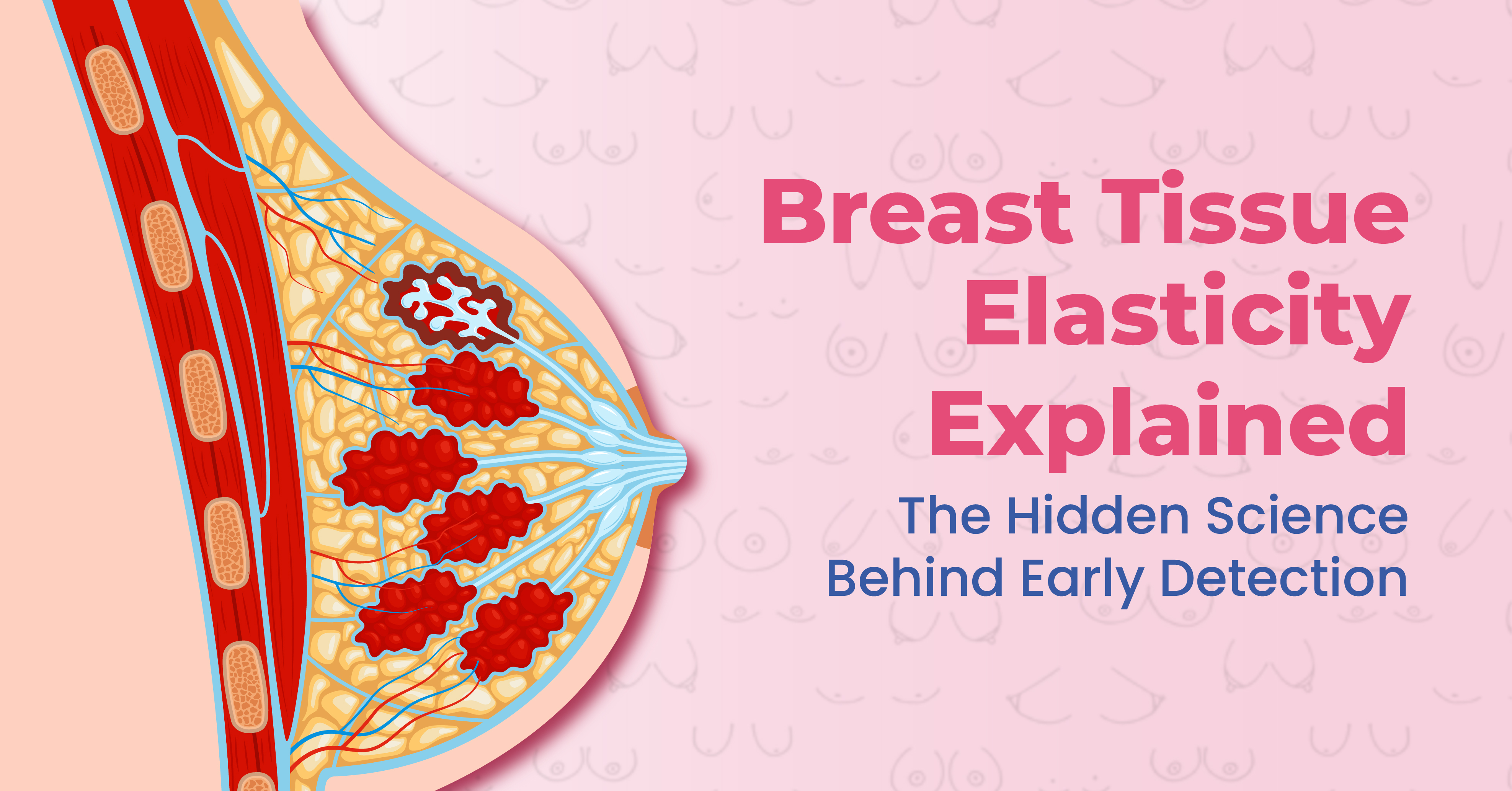
Table of Contents
More from Blog

Mar 14, 2026

Mar 14, 2026

Mar 14, 2026

Mar 14, 2026
Mar 14, 2026
Have you ever wondered why doctors say some breast lumps feel "hard" while others feel "soft"? That difference is not random. It comes down to something called breast tissue elasticity - a hidden but powerful factor in early detection of breast abnormalities.
In simple terms, elasticity means how soft or stiff your breast tissue is. Healthy tissue usually feels flexible. Unhealthy tissue, including some tumors, often feels firmer. Modern screening tools use this difference to detect problems earlier and more accurately.
Understanding breast tissue elasticity can help you:
- Know what changes to watch for
- Understand how imaging tests work
- Feel more confident during screenings
- Support early detection of breast cancer
This guide explains the science in clear, simple language - so you can make informed health decisions.
What Is Breast Tissue Elasticity?
Breast tissue elasticity refers to how soft, firm, or flexible the tissue inside your breast feels when pressure is applied.
Think of it like this:
- A sponge - soft and elastic
- A rubber ball - firm and less elastic
- A stone - very hard and not elastic
Healthy breast tissue is usually somewhat soft and flexible. But certain abnormal growths - including some breast cancers - are stiffer than surrounding tissue.
Doctors use this stiffness difference to help detect suspicious areas earlier.
Why Is This Important?
Because many breast tumors are firmer than normal tissue, detecting changes in elasticity can improve early diagnosis.
According to the World Health Organization (WHO), breast cancer is one of the most common cancers globally. Early detection significantly increases survival rates.
Why Does Elasticity Matter for Early Detection?
1. Cancer Tissue Is Often Stiffer
Cancer cells grow differently than normal cells. They:
- Multiply rapidly
- Form dense clusters
- Create fibrous tissue around them
This makes tumors feel harder during a physical exam and appear stiffer on imaging tests.
2. It Helps Detect Problems Earlier
Elasticity-based imaging can:
- Identify small abnormal areas
- Reduce unnecessary biopsies
- Improve screening accuracy
In some cases, stiffness changes appear before structural changes are visible on a regular mammogram.
3. It Improves Screening in Dense Breasts
Women with dense breast tissue sometimes have tumors that are harder to see on traditional mammograms. Elasticity-based techniques can help detect differences in stiffness even when density is high.
How Doctors Measure Breast Tissue Elasticity
Doctors do not guess elasticity - they use advanced imaging tools.
1. Physical Breast Examination
During a clinical exam, a doctor gently presses the breast tissue to feel for:
- Hard lumps
- Areas that feel different
- Fixed or immovable masses
This is the oldest form of elasticity testing.
2. Ultrasound Elastography
One of the most important technologies today is elastography.
It works like a regular ultrasound but adds stiffness measurement.
It can:
- Show color maps of soft vs. stiff tissue
- Help distinguish benign cysts from solid masses
- Reduce false alarms
According to the National Institutes of Health (NIH), elastography improves diagnostic accuracy when used alongside conventional ultrasound.
3. MRI Elastography
Magnetic Resonance Imaging (MRI) can also measure tissue stiffness in advanced cases. This is usually used for high-risk patients or unclear findings.
Breast Tissue Elasticity vs. Breast Density
Many people confuse between these two.
| Feature | Breast Tissue Elasticity | Breast Density |
|---|---|---|
| What it measures | Softness or stiffness | Amount of fibrous vs. fatty tissue |
| Detected by | Physical exam, elastography | Mammogram |
| Cancer connection | Tumors often stiffer | Dense breasts may hide tumors |
| Can change over time? | Yes | Yes |
Here's a simple comparison:They are related but not the same.
You can have dense breasts that are still soft.
You can also have non-dense breasts with a stiff lump.
What Changes Breast Tissue Elasticity?
Several natural and medical factors affect elasticity.
1. Age
- Younger women - usually firmer tissue
- After menopause - softer, more fatty tissue
Hormonal changes play a big role.
2. Pregnancy & Breastfeeding
Breast tissue becomes:
- Fuller
- More glandular
- Temporarily firmer
This usually returns to baseline afterward.
3. Hormone Therapy
Estrogen-based treatments may increase glandular tissue, slightly affecting elasticity.
4. Inflammation or Infection
Conditions like mastitis can make tissue feel hard and painful.
5. Tumors or Abnormal Growth
Both benign (non-cancerous) and malignant (cancerous) growths can feel firm.
That's why imaging tests are necessary - firmness alone does not mean cancer.
How to Check for Changes at Home
While home checks cannot replace screening, they are helpful.
Step-by-Step Self-Check Guide
- Stand in front of a mirror.
- Look for visible changes.
- Use flat fingers to gently press breast tissue.
- Feel for:
- Hard lumps
- Thickened areas
- Changes from previous exams
Do this once a month.
Best time: A few days after your period ends.
If you notice a new firm area that does not go away, consult a doctor.
The Centers for Disease Control and Prevention (CDC) emphasizes knowing what is normal for your body.
When Should You See a Doctor?
Seek medical evaluation if you notice:
- A new hard lump
- Skin dimpling
- Nipple discharge
- Persistent breast pain
- Swelling in one area
Do not panic. Many lumps are benign cysts or fibroadenomas.
But early evaluation is always safer.
The Role of Early Screening
According to global cancer statistics:
- Early-stage breast cancer has a much higher survival rate.
- Screening improves early detection outcomes significantly.
Screening tools include:
- Mammography
- Ultrasound
- Elastography
- MRI (for high-risk individuals)
Discuss your screening schedule with your doctor based on:
- Age
- Family history
- Genetic risk factors
Real-Life Example
Imagine two women:
- Anita (Age 35) feels a firm pea-sized lump during self-exam. She sees her doctor. Elastography shows the lump is soft inside - likely a benign cyst. No biopsy needed.
- Meera (Age 48) attends routine screening. Elastography detects a small stiff area not clearly visible on mammogram. Biopsy confirms early-stage cancer. Treatment begins early.
The difference? Early detection using tissue stiffness analysis.
Prevention & Monitoring Tips
While elasticity itself cannot be controlled directly, you can:
- Maintain a healthy weight
- Exercise regularly
- Limit alcohol intake
- Avoid smoking
- Attend routine screenings
- Perform monthly self-checks
Healthy lifestyle choices may reduce overall breast cancer risk.
Key Takeaways
- Breast tissue elasticity refers to how soft or stiff breast tissue is.
- Cancerous tissue is often stiffer than normal tissue.
- Elastography helps detect stiffness differences early.
- Elasticity is different from breast density.
- Monthly self-awareness plus medical screening improves outcomes.
Understanding this hidden science empowers you to take proactive steps.
FAQs
1. What is breast tissue elasticity in simple terms?
It is how soft or firm your breast tissue feels when pressed.
2. Is hard breast tissue always cancer?
No. Many hard lumps are non-cancerous. Always get medical evaluation.
3. How accurate is elastography?
When combined with ultrasound, it improves diagnostic accuracy and may reduce unnecessary biopsies.
4. Can breast tissue elasticity change with age?
Yes. Hormonal changes affect softness and firmness over time.
5. Does mammography measure elasticity?
No. Mammograms measure density, not stiffness.
Final Thoughts
Breast tissue elasticity may sound technical, but it plays a vital role in early detection.
By understanding how stiffness differences signal potential problems, you can:
- Feel more confident about screenings
- Know when to seek medical advice
- Take charge of your breast health
Early detection saves lives.
Medical Disclaimer
This content is for informational purposes only and does not replace professional medical advice, diagnosis, or treatment. Always consult a qualified healthcare provider for personalized guidance.
